Plain-language guide to how solar panels, inverters, and batteries work together in your home.
Solar panels capture sunlight → convert it into electricity → power your home → send extra energy back to the grid for credits.
Solar panels on your roof contain photovoltaic (PV) cells that absorb sunlight. Even on cloudy days your panels make power, just less of it. KC gets 4.7 to 5.2 peak sun hours daily, plenty for solar to make sense.
Panels produce direct current (DC) electricity. Your inverter converts it to AC power, which is what your appliances run on. Most modern inverters also include built-in monitoring.
Solar power runs your home first. Lights, appliances, HVAC, everything. Only when solar runs short does your home pull from the grid.
When your panels make more than you use, the extra power goes back to the grid and earns you credits, or charges a battery for later.
Solar panels (also called PV modules) are the heart of your system. Silicon cells inside them turn sunlight into electricity.
One central inverter for the whole array. Cost-effective for simple roof layouts with minimal shading. Brands: SolarEdge (with optimizers), Fronius, SMA. Best for: straightforward south-facing roofs.
Individual inverter on each panel. Best for complex roofs with multiple orientations or shading. Brands: Enphase, AP Systems, Hoymiles. Best for: challenging roofs, maximum per-panel optimization.
Panel-level devices that maximize output from each panel before sending power to a central inverter. Good for roofs with some shading.
All-in-one inverter that manages solar, battery, and grid connection. Brands: SolArk, Fronius Symo Hybrid. Best for: homes with battery storage or planning to add batteries.
Battery storage lets you save excess solar energy to use at night, during peak rate hours, or during grid outages. Modern lithium iron phosphate (LFP) batteries are safe, long-lasting, and compact.
Most KC homeowners go grid-tied. Adding a battery gives you backup power when the grid goes down.
Your panels power your home first. Excess electricity goes back to Evergy through net metering and earns you credits. Most KC homeowners choose this.
Everything grid-tied does, plus a battery that keeps your power on during outages. Popular after KC ice storms and derecho events.
Every system we install includes remote monitoring. You can check your system’s performance from your phone, and we receive alerts if anything deviates from expected output.
Pro Tip: Monitoring alerts let us catch performance issues, sometimes before you even notice. We’ve resolved problems for customers before their utility bill arrived.
From your first call to a live, monitored system, here’s exactly what to expect when you go solar with BGE.
We assess your roof condition, orientation, shading, and energy usage. We pull your utility data to size your system accurately. No cost, no obligation.
Our engineers create a system spec tailored to your roof and energy goals. We present options at different price points and explain the trade-offs clearly.
We handle all permit applications with your local municipality and coordinate with your HOA if required. This typically takes 2 to 4 weeks depending on your jurisdiction.
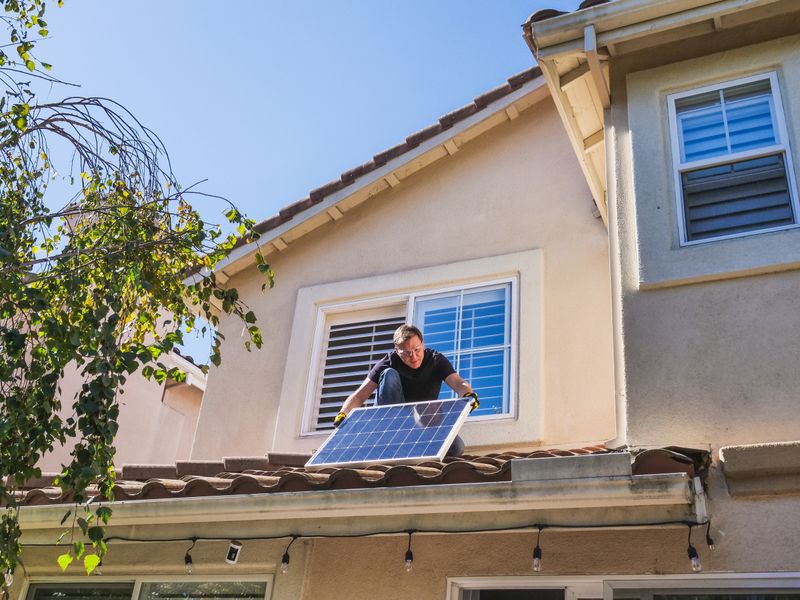
Our certified install team arrives on schedule. Most residential installations complete in 1 to 2 days. We work cleanly and respect your property throughout.
Your local inspector approves the installation. We then coordinate with your utility company for interconnection approval, typically 1 to 2 weeks after inspection.
Your system is activated, monitoring is configured, and we walk you through the app. You’re now generating clean energy and saving money from day one.
Get a custom quote designed for your specific home and energy needs, no pressure, no obligation.